
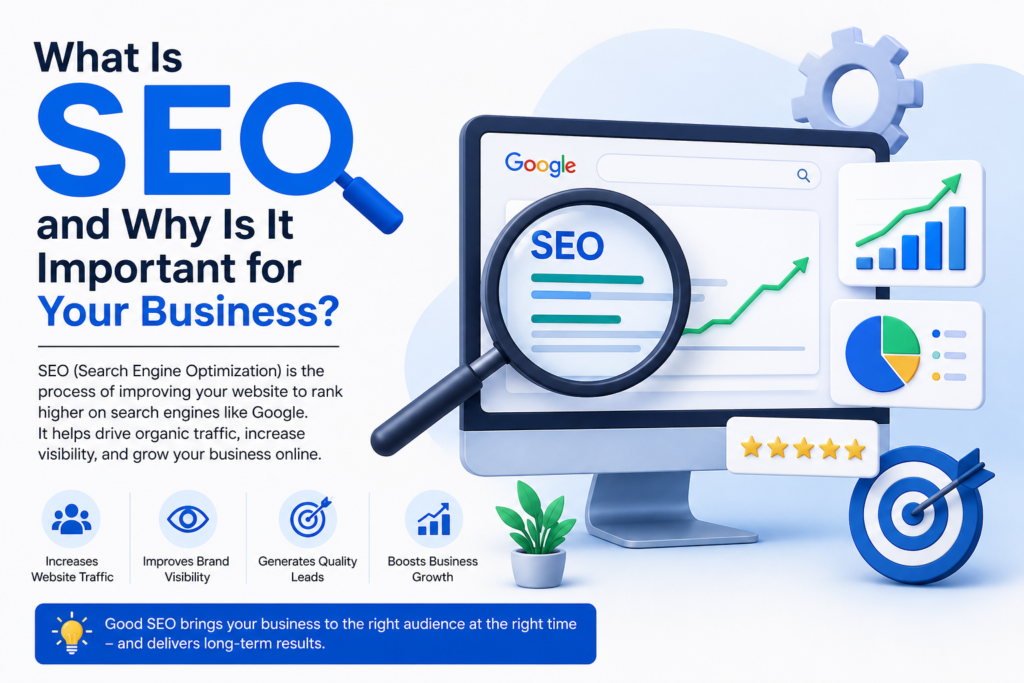
Search Engine Optimization (SEO) is the process of improving your website so it appears higher in search engine results when people search for products, services, or information related to your business. Every day, billions of searches happen on Google, and many of those searches come from people who are ready to buy, compare, or learn. If your website is not visible on the first page, you are likely missing valuable opportunities to attract customers.
SEO has changed dramatically over the last few years. It is no longer just about adding keywords to a webpage. Modern SEO focuses on creating helpful content, delivering an excellent user experience, improving website speed, earning trustworthy backlinks, and demonstrating expertise. With the rise of AI-powered search experiences such as Google AI Overviews, businesses also need to optimize for visibility beyond traditional search results. Research shows that AI-generated summaries are changing how users click on websites, making quality content and authority even more important.
Understanding SEO
What Does SEO Mean?
SEO stands for Search Engine Optimization. Its primary goal is to increase your website’s visibility in unpaid (organic) search results. Unlike paid advertising, SEO continues delivering results long after your content is published, making it one of the highest-return digital marketing strategies.
SEO involves optimizing every aspect of your website, including page titles, content quality, website speed, internal links, images, structured data, and mobile usability. It also includes building authority through backlinks and creating content that satisfies user intent.
How Search Engines Work
Search engines like Google use automated bots to crawl websites, index pages, and rank them according to hundreds of ranking factors. These factors include relevance, content quality, page speed, user experience, mobile friendliness, and website authority.
When someone searches for “best digital marketer in Kerala” or “SEO services near me,” Google’s algorithm evaluates thousands of pages before deciding which websites deserve the top positions. Businesses that consistently publish valuable, trustworthy, and optimized content have a better chance of ranking highly.
Why SEO Matters in 2026
SEO remains one of the most effective marketing channels because it connects businesses with people actively searching for solutions. Unlike display ads or social media promotions that interrupt users, SEO reaches customers precisely when they have intent.
Industry studies indicate that organic search continues to generate a significant portion of website traffic. Google processes billions of searches every day, and businesses ranking on the first page receive the majority of clicks. Recent research also highlights that AI-powered search experiences are changing click behavior, making authority, trust, and structured content even more valuable.
Organic Traffic Creates Sustainable Growth
Paid advertising stops producing results the moment your budget ends. SEO works differently. A well-optimized article or landing page can continue attracting visitors for months or even years.
Instead of paying for every visitor, businesses build an asset that consistently generates leads, inquiries, and sales.
SEO Builds Trust
People naturally trust websites that appear at the top of Google’s search results. High rankings signal expertise, authority, and reliability. Strong SEO also improves your site’s design, loading speed, and content quality, creating a better experience for visitors.
On-Page SEO
This focuses on everything you can optimize directly on your website:
- Keyword optimization
- Title tags
- Meta descriptions
- Internal linking
- Image optimization
- Content quality
Off-Page SEO
Off-page SEO strengthens your website’s reputation by earning backlinks from trusted websites, gaining mentions across the web, and building your brand’s authority.
Technical SEO
Technical SEO ensures search engines can easily crawl and index your website. It includes:
- Fast loading speed
- Mobile responsiveness
- HTTPS security
- XML sitemaps
- Structured data
- Clean website architecture
Local SEO
For businesses serving specific locations, Local SEO is essential. Optimizing your Google Business Profile, collecting customer reviews, and maintaining consistent business information help attract nearby customers.
Benefits of SEO for Businesses
Businesses invest in SEO because it delivers measurable results across multiple areas.
Generates Qualified Leads
SEO targets users already searching for your services. These visitors typically have higher purchase intent, resulting in better conversion rates.
Improves Conversion Rates
SEO is not just about traffic. By matching search intent with high-quality content, businesses attract visitors more likely to become customers.
Enhances User Experience
Google rewards websites that provide excellent experiences. Faster pages, mobile-friendly layouts, intuitive navigation, and valuable content all contribute to stronger rankings.
Offers Excellent ROI
Although SEO requires time and consistent effort, its long-term return often exceeds many paid marketing channels because traffic continues without paying for every click.
Modern SEO Trends
AI Search Is Reshaping SEO
Search engines increasingly display AI-generated answers before traditional listings. Businesses now need to optimize not only for rankings but also for AI visibility by creating comprehensive, trustworthy, and structured content.
Recent studies show AI Overviews can significantly reduce traditional click-through rates unless your content becomes part of those AI-generated answers.
E-E-A-T Matters More Than Ever
Google emphasizes:
- Experience
- Expertise
- Authoritativeness
- Trustworthiness
Businesses should publish original insights, demonstrate real expertise, cite credible sources, and maintain accurate information to improve search visibility.
How to Build an Effective SEO Strategy
A successful SEO strategy follows these essential steps:
- Research keywords your audience actually searches.
- Create helpful, original content.
- Optimize titles, headings, and meta descriptions.
- Improve website speed and mobile usability.
- Build quality backlinks.
- Track rankings, traffic, and conversions.
- Continuously update older content.
SEO is not a one-time task. Search engines constantly evolve, and businesses that regularly improve their websites maintain stronger rankings over time.
Conclusion
SEO is far more than simply ranking higher on Google. It is a long-term strategy for building visibility, credibility, and sustainable business growth. By optimizing your website for both search engines and users, you attract qualified visitors, improve customer trust, and generate consistent leads without relying solely on paid advertising.
As search continues evolving with AI-generated experiences and changing user behavior, businesses that prioritize high-quality content, technical excellence, and genuine expertise will be best positioned to succeed. Investing in SEO today helps create a stronger online presence that delivers value for years to come.
Frequently Asked Questions
1. What is SEO in simple words?
SEO (Search Engine Optimization) is the process of improving your website so it appears higher in Google search results and attracts more organic visitors.
2. How long does SEO take to show results?
Most websites begin seeing improvements within 3 to 6 months, while competitive industries may require additional time.
3. Is SEO better than paid advertising?
SEO and paid ads work best together. SEO provides long-term organic traffic, while paid advertising delivers immediate visibility.
4. Why is Local SEO important?
Local SEO helps nearby customers find your business through Google Search and Google Maps, increasing calls, visits, and inquiries.
5. Does AI replace SEO?
No. AI changes how people search, but SEO remains essential. Businesses now need to optimize for both traditional search results and AI-powered search experiences.